


The Carbide Crisis: Why Cutting Tool Prices Are Soaring in 2026
Carbide cutting tool prices have risen by up to 500% in under 18 months. If you buy drills, end mills, or inserts, this affects you directly, and the full impact has barely reached the UK yet. Here is what is happening, why, and the practical steps you can take to protect your operation, including how regrinding can significantly cut your costs right now.
Something significant is happening in the cutting tool market and it has nothing to do with economic cycles or post-pandemic catch-up. The raw material at the heart of every carbide drill, end mill, insert, and rod you buy is in the middle of a supply crisis with no quick resolution in sight. Tungsten carbide, the ultra-hard compound that gives modern cutting tools their performance, has become one of the most geopolitically sensitive industrial materials on the planet.
For engineers, machinists, and buyers reading this, the numbers are stark. The price of Ammonium Paratungstate (APT), the primary chemical intermediate used to make tungsten carbide, rose from approximately £237 per metric ton unit (MTU) at the start of 2025 to over £888 per MTU by early 2026. That is not a rounding error. It is a fundamental reset of what carbide costs to produce, and those costs flow directly into the tools you purchase.
The Numbers: What Has Actually Happened to Prices
To understand the scale of this shift, it helps to track tungsten through its supply chain. Tungsten ore is first refined into APT. APT is processed into tungsten oxide and then into tungsten carbide powder, which is sintered under extreme heat and pressure with a cobalt binder to produce the dense blanks used to make cutting tools. At every stage of that chain, prices have moved dramatically upward.
| Material | Early 2025 | Early 2026 | Change |
|---|---|---|---|
| APT (Ammonium Paratungstate) | ~£237/MTU | ~£888/MTU | +275% |
| Ferrotungsten | ~£36/kg | Over £158/kg | +340%+ |
| Tungsten carbide powder (2025) | Baseline | +241% during 2025 | +241% |
| 16mm carbide rod (UK, per piece) | ~£30 | ~£139 | +363% |
| Carbide scrap value (UK) | Low | Up to £25/kg | 3-4x 30-year highs |
International tungsten commodity prices are quoted in US dollars. GBP figures above are approximate equivalents using prevailing exchange rates.
APT Price Trend, 2025 to 2026
Approximate UK equivalent price per metric ton unit (£/MTU) following China's February 2025 export controls
Material Price Increases by Category (%)
Percentage price rise across the tungsten supply chain, January 2025 to early 2026
The China Factor: Why the Supply Chain Broke
China does not merely dominate tungsten production; it effectively is tungsten production. Between 80% and 87% of global tungsten mining and processing capacity sits within China's borders, producing approximately 67,000 tonnes annually. All other producers combined, including Vietnam, Russia, Rwanda, Bolivia, Austria, and Spain, contribute only a few thousand tonnes. There is no realistic short-term alternative to Chinese tungsten at global scale.
Global Tungsten Supply: China vs. Rest of World
China controls approximately 87% of global tungsten mining and processing capacity
In February 2025, China introduced a formal permit-based export control system requiring government approval for all tungsten material shipments. The result was immediate. Chinese tungsten export volumes fell by nearly 40% year-on-year. China then designated only 15 approved export companies, centralising control further. In early 2026, additional dual-use restrictions targeted Japan, one of the world's largest tungsten importers and a major producer of cutting tools for the global market.
At the same time, China's own domestic demand rose sharply. Its mining quota was cut by 6.5% in 2025 while internal consumption for AI infrastructure, electric vehicles, and decarbonisation technologies increased. China is consuming more of its own tungsten at exactly the moment it exports less. Add rearmament: tungsten is a critical material in armour-piercing ammunition and defence hardware, and NATO member states are buying more of it. Every tightening of the tap sends another ripple through the finished tool supply chain.
How This Flows Into Cutting Tool Prices
Tungsten-based materials account for approximately 60% to 70% of the manufacturing cost of a solid carbide cutting tool. When raw material costs rise by 500%, no manufacturer can absorb that. The cost passes through the supply chain stage by stage until it reaches the price you pay for a carbide drill or end mill. Major global cutting tool manufacturers are now buying tungsten at any cost, placing bulk orders without knowing final landed prices, simply to secure supply. Lead times are extending and the raw material differential that once allowed budget brands to undercut quality brands is rapidly eroding.
The UK Picture: The Full Impact Has Not Arrived Yet
The UK typically sits 4 to 6 months behind price movements that first appear in China and then in North American markets. That lag has cushioned UK buyers so far, but it means the full scale of this increase has not yet landed here. UK cutting tool manufacturers have begun to signal the direction clearly. One Coventry-based manufacturer, in eight years of trading without ever raising prices, absorbed Covid disruption, electricity rising from 10p to over £1.00 per kWh, wage increases, National Insurance changes, and a weakening pound before implementing its first ever price increase in January 2026, averaging approximately 9%, described as covering only part of the raw material increase experienced so far.
The consensus across the industry is that prices will not meaningfully retreat in the short term. Non-Chinese tungsten supply cannot be scaled quickly. New mining projects take years to develop and processing capacity outside China barely exists.
Regrinding: The Smartest Tool in Your Arsenal Right Now
Drill Service has offered professional regrinding and reconditioning of cutting tools since 1969. For much of that time, regrinding was a cost-saving option that made sense for high-value tooling or high-volume runs. Today, with solid carbide tool prices rising by 200% to 400% in under two years, it is something closer to essential for any business that machines metal.
When a solid carbide end mill or drill becomes worn, the instinctive response is to replace it. In the current market, that instinct is costing businesses significantly more than it needs to. A worn carbide tool that can be reground back to its original geometry and cutting edge specification is worth considerably more in service than as scrap carbide, even at today's elevated scrap prices of up to £25 per kilogram. The tool was manufactured with precision, and that precision can be restored.
Regrinding typically costs 30% to 50% of the price of a new equivalent tool at pre-crisis pricing. At today's new tool prices, the saving is far more dramatic. A 10mm solid carbide end mill that once cost around £25 new and £10 to regrind now costs £70 to £90 new, while a quality regrind remains a fraction of that. The chart below shows how this gap has widened since 2024.
New Tool vs. Regrind Cost: 2024 versus 2026
Indicative cost comparison for a 10mm solid carbide end mill; regrind costs have risen far less than new tool prices
A well-specified solid carbide end mill or drill can go through three or four full regrinds before retirement. Each regrind removes a small amount of flute length and restores the geometry and edge quality to full specification. The total cost across the tool's working life, compared with buying new replacements at today's prices, can be reduced by 60% or more. Regrinding also keeps carbide in active service rather than flowing out of your supply chain, which matters when availability is tighter than it has been for a generation.
What Can Be Reground?
The majority of solid carbide round tools are candidates for regrinding, subject to condition. The key criteria are straightforward: the tool must not be cracked or chipped beyond recoverable geometry, there must be sufficient length remaining for a productive regrind, and the original specification must be known or determinable. Tools that have been run correctly and retired at the right stage of wear make the best candidates.
For a detailed guide to what regrinding involves, when it makes sense, and how to get the most from it, read our dedicated article: Is It Worth Regrinding Your Cutting Tools?
Professional Regrinding and Reconditioning, Est. 1969
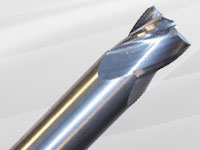
We regrind solid carbide end mills, slot drills, drills, reamers, and a wide range of other precision cutting tools. Every regrind is carried out to the original specification using precision CNC grinding equipment, with inspection before and after grinding.
- ✓ Solid carbide end mills and slot drills (2, 3, and 4 flute)
- ✓ Solid carbide jobber and stub drills
- ✓ Solid carbide reamers and specialist profiles
- ✓ HSS tooling including end mills, drills, taps, and reamers
- ✓ Custom and special tool profiles reground to original specification
Call us on 01293 774911, email sales@drill-service.co.uk, or use our contact form to discuss your regrinding requirements. We will advise on suitability and turnaround. You can also read our full guide: Is It Worth Regrinding Your Cutting Tools?
Regrinding vs. scrap: know the difference
Carbide scrap values have reached up to £25 per kilogram in the UK, but selling worn tools as scrap destroys the precision engineering value while returning only a fraction of the replacement cost. Only tools that are genuinely beyond regrinding should be scrapped. Everything else should be assessed for reconditioning first. Contact us and we can evaluate your worn tools.
Carbide-Tipped Tooling: Less Tungsten, Same Performance
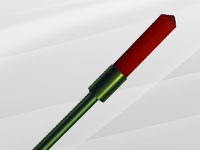
Not every application demands a solid carbide tool. Solid carbide tools use tungsten carbide from shank to tip. Carbide-tipped tools use a hardened steel shank with carbide cutting edges brazed at the tip only. The performance difference in a wide range of common applications is minimal; the difference in tungsten content per tool is very significant.
When to specify carbide-tipped over solid carbide
For general-purpose drilling in steel, cast iron, aluminium, and non-ferrous alloys, carbide-tipped drills deliver the hardness and heat resistance of a carbide cutting edge with the toughness and shock-absorbing properties of a steel body. In the current raw material environment, specifying a carbide-tipped drill where a solid carbide tool is not strictly required is a direct way to reduce your exposure to carbide price inflation without sacrificing cutting results.
Carbide-tipped tooling is particularly well suited to larger diameter drilling, where solid carbide carries a steep material cost premium, and to applications with interrupted cuts or variable material conditions where the steel shank's toughness is an engineering advantage rather than a compromise. Many applications that migrated from HSS to solid carbide during the 2010s, when carbide was relatively cheap, are now worth re-evaluating with carbide-tipped tooling in mind.
Browse our carbide-tipped drill range and solid carbide drill range side by side, or ask our technical team to advise on the right specification for your application. We also stock a full range of milling cutters and can produce custom and special tooling to your specification.
Five More Steps to Protect Your Cost Base
-
1
Stay with suppliers you trust Switching suppliers during a shortage is counterproductive. Distributors with long-term manufacturer relationships are the ones with pre-purchased stock at better pricing. Chasing the cheapest online price right now is likely to mean delayed delivery, inconsistent quality, and no relationship to fall back on when stock is tight.
-
2
Focus on cost per part, not cost per tool A tool that consistently outlasts a cheaper alternative by 30% is worth considerably more than it was before this crisis. Premium, consistent-quality tooling earns its premium back faster than at any previous point. Browse our milling cutters or solid carbide drills for quality options with proven tool life.
-
3
Optimise your speeds and feeds Running carbide at correct parameters significantly extends tool life and reduces consumption per part. Getting the right grade, geometry, and coating for your specific material and machine has never delivered a greater financial return than it does right now. Our technical team is here to help.
-
4
Plan your purchasing ahead Explore call-off agreements with your distributor to lock in stock availability. Companies that secured inventory in 2025 at pre-surge pricing hold a genuine competitive advantage. Understanding your consumption patterns and working ahead gives you options that reactive purchasing does not.
-
5
Budget for further increases through 2026 The UK lag means more price movement is coming. If your tooling budget is based on 2024 or early 2025 costs, it needs revisiting now before it becomes a problem mid-year.
The Bottom Line
The carbide crisis is not a headline from a specialist commodity magazine that does not apply to your business. If you machine metal and you buy cutting tools, it is already affecting what you pay, and it will affect you more before it affects you less. The root cause, China's dominance of tungsten supply combined with the political decision to restrict exports, is structural rather than cyclical. Recovery depends on years of new mining development and processing capacity being built outside China, and that is not happening quickly.
The businesses that navigate this best are the ones that act on it now. Send your worn tools for regrinding assessment, review where carbide-tipped tooling can replace solid carbide without compromising results, and work with a supplier who holds UK stock and provides honest technical advice.
At Drill Service, we have been supplying and regrinding precision cutting tools for UK engineers since 1969. Regrinding is a core part of what we do, not an afterthought, and right now it is one of the most valuable conversations we can have with any machining business. Call us on 01293 774911 or email sales@drill-service.co.uk.
Talk to Us About Regrinding and Tooling Costs
Whether you have worn tools to assess, applications where carbide-tipped tooling may save you money, or simply want straightforward advice on managing your costs in the current market, our team is here. We have been doing this since 1969.
Enquire About Regrinding Carbide Tipped Drills Solid Carbide Drills