


Is Regrinding Worth It? The Real Cost-Benefit of Sending Your Tools Back
Carbide prices are climbing, lead times are stretching, and the pressure to cut costs is constant. We run the numbers on whether regrinding really stacks up, and at what size it stops making sense.
When Drill Service was founded in 1961, regrinding was not a value-added afterthought; it was the core of the business. Engineers sent back their worn drills, we reground them to original geometry, and they went back to work. The economics were simple and the logic was unshakeable.
Fast forward six decades, and disposable culture crept into the workshop. Cheap imports made it easier to bin a worn tool than to manage the logistics of sending it away. But the market has shifted again. Carbide prices have risen sharply, driven by tightening tungsten supply chains, energy costs in cemented carbide production, and ongoing global demand from aerospace, automotive, and medical sectors. The case for regrinding has never been stronger, and the maths now firmly supports it.
This post breaks down the real numbers: when regrinding pays, when it does not, and how to model the savings across your own tooling spend.
What Does Regrinding Actually Do?
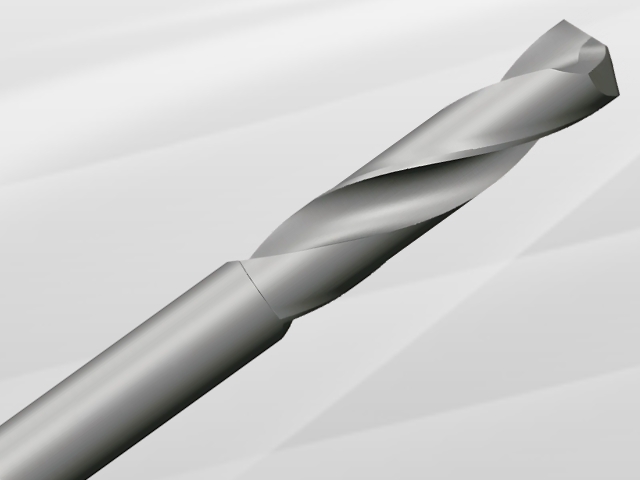
A regrind is not a bodge. Carried out correctly on CNC tool grinding equipment by experienced operators, a quality regrind restores the tool to its original cutting geometry, point angle, clearance angles, and edge condition. The result performs indistinguishably from a new tool in most machining applications.
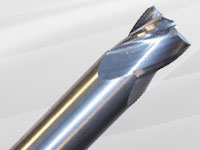
For carbide drills, the operation removes the worn cutting edge and re-establishes the point. For endmills, there are two distinct services: an end face regrind (restoring the face cutting edges, with no change to diameter) and an OD regrind (restoring the peripheral cutting edges, which reduces the diameter by 0.20mm). Understanding which service applies to your application is essential before sending tools in.
At Drill Service, every tool is inspected before regrinding. If a tool is beyond economical repair, we tell you. Nothing leaves our factory unless it meets our standard.
The Benefits and the Limitations
Reasons to Regrind
- + Significant cost saving vs buying new, particularly on larger diameter carbide tools
- + 3 to 5 working day turnaround, often faster than waiting for new tool deliveries
- + Tool geometry restored to original specification on CNC grinding equipment
- + Reduces carbide waste, lowering the environmental footprint of your operation
- + Known tool, known performance; your setters already understand how it behaves
- + Batching multiple tools in one order significantly reduces per-tool carriage cost
- + Scrap value credit (£25/kg) for tools found beyond repair on inspection
Points to Consider
- ! Each regrind shortens the tool slightly; a drill loses a small amount of flute length
- ! OD endmill regrinds produce a tool 0.20mm undersize; not suitable for tight diameter-critical holes without offset adjustment
- ! Not every tool is suitable; heavy damage, chipping, or deep cracking may make a regrind uneconomical
- ! Coatings (TiN, AlTiN, TiSiN etc.) are removed during regrinding; the tool runs uncoated unless recoating is arranged
- ! Tools must be sent in; there is a brief period out of your tool crib
- ! At very small diameters (typically below 5mm), the economics narrow considerably
A Note on Coatings
This is perhaps the most overlooked consideration. If your carbide tools carry a premium coating such as AlTiN, TiSiN, or DLC, that coating is removed during the grinding process. The reground tool will cut as an uncoated carbide tool unless you arrange recoating separately. For many general machining applications this is perfectly acceptable, particularly on drills where cutting conditions are forgiving. For high-speed dry machining of hardened steels or titanium alloys, factor in the cost of recoating when modelling your savings.
Carbide Drill Cost Scenarios
The regrind pricing is fixed by size band. To model the saving, we compare the regrind cost (including a share of the £8.00 return carriage charge, split across 3 tools) against the actual current price of each tool taken directly from drill-service.co.uk at the time of writing. Part numbers and prices reflect the live Drill Service website — so these figures are real, not estimates.
Small Carbide Drills (3.00mm to 9.99mm) — Regrind Price: £14.67
| Part No. | Drill Size | Current Price (New) | Regrind Price | Carriage Share | Total Regrind Cost | Saving Per Tool | Saving % |
|---|---|---|---|---|---|---|---|
| DC-4.00 | 4.00mm | £20.64 | £14.67 | £2.67 | £17.34 | £3.30 | 16% |
| DC-5.00 | 5.00mm | £25.48 | £14.67 | £2.67 | £17.34 | £8.14 | 32% |
| DC-6.00 | 6.00mm | £32.42 | £14.67 | £2.67 | £17.34 | £15.08 | 47% |
| DC-8.00 | 8.00mm | £57.96 | £14.67 | £2.67 | £17.34 | £40.62 | 70% |
| DC-9.00 | 9.00mm | £68.89 | £14.67 | £2.67 | £17.34 | £51.55 | 75% |
Prices taken from drill-service.co.uk. Carriage of £8.00 split across 3 tools per order (£2.67/tool). At 9mm, regrinding saves 75% per tool versus buying new.
Large Carbide Drills (10.00mm to 16.00mm) — Regrind Price: £29.33
| Part No. | Drill Size | Current Price (New) | Regrind Price | Carriage Share | Total Regrind Cost | Saving Per Tool | Saving % |
|---|---|---|---|---|---|---|---|
| DC-10.00 | 10.00mm | £88.84 | £29.33 | £2.67 | £32.00 | £56.84 | 64% |
| DC-12.00 | 12.00mm | £129.81 | £29.33 | £2.67 | £32.00 | £97.81 | 75% |
| DC-14.00 | 14.00mm | £203.17 | £29.33 | £2.67 | £32.00 | £171.17 | 84% |
| DC-16.00 | 16.00mm | £311.05 | £29.33 | £2.67 | £32.00 | £279.05 | 90% |
Prices from drill-service.co.uk. The standard DC jobber range runs to 16.00mm online; larger sizes are available — contact us for pricing. At 16mm, regrinding saves 90% per tool versus buying new.
Real-World Example: 3 x DC-16.00 Carbide Drills
Buy new: 3 x £311.05 = £933.15
Regrind: 3 x £29.33 + £8.00 carriage = £95.99
Saving: £837.16 on a single order of just three tools, returned to original geometry in 3 to 5 working days.
Carbide Endmill Cost Scenarios
Endmills offer two regrind options and the right choice depends on where the wear is occurring. An end face regrind addresses wear on the face cutting edges with no change to diameter. An OD regrind addresses wear on the peripheral cutting edges, reducing the finished diameter by 0.20mm.
Endmill End Face Regrind
| Part No. | Endmill Size | Current Price (New) | Regrind Price | Carriage Share | Total Regrind Cost | Saving Per Tool | Saving % |
|---|---|---|---|---|---|---|---|
| EMC-6.00 | 6.00mm | £29.82 | £29.33 | £2.67 | £32.00 | No saving | N/A |
| EMC-8.00 | 8.00mm | £33.57 | £29.33 | £2.67 | £32.00 | £1.57 | 5% |
| EMC-10.00 | 10.00mm | £47.09 | £36.67 | £2.67 | £39.34 | £7.75 | 16% |
| EMC-16.00 | 16.00mm | £101.53 | £36.67 | £2.67 | £39.34 | £62.19 | 61% |
| EMC-20.00 | 20.00mm | £235.22 | £44.00 | £2.67 | £46.67 | £188.55 | 80% |
Prices from drill-service.co.uk. The standard EMC range runs to 20.00mm online; larger sizes available — contact us. At 6mm the end face regrind cost exceeds the new tool price at these real-world prices; the case becomes compelling from 16mm upward. EMC-25 and EMC-32 are not stocked online.
Endmill OD (Peripheral) Regrind
| Part No. | Endmill Size | Current Price (New) | Regrind Price | Carriage Share | Total Regrind Cost | Saving Per Tool | Saving % |
|---|---|---|---|---|---|---|---|
| EMC-6.00 | 6.00mm | £29.82 | £44.00 | £2.67 | £46.67 | No saving | N/A |
| EMC-8.00 | 8.00mm | £33.57 | £44.00 | £2.67 | £46.67 | No saving | N/A |
| EMC-10.00 | 10.00mm | £47.09 | £58.67 | £2.67 | £61.34 | No saving | N/A |
| EMC-16.00 | 16.00mm | £101.53 | £58.67 | £2.67 | £61.34 | £40.19 | 40% |
| EMC-20.00 | 20.00mm | £235.22 | £73.33 | £2.67 | £76.00 | £159.22 | 68% |
At real website prices, OD regrind only starts to deliver a saving from 16mm upward. Below that, the combination of lower endmill prices and the higher OD regrind band means replacement is the smarter call. All OD-reground tools will be 0.20mm undersize. EMC-25 and EMC-32 are not stocked online — contact us for pricing on larger sizes.
Cobalt and HSS: The Full Picture
While this post has focused on carbide due to its current market dynamics, Drill Service's regrinding expertise is not limited to carbide. We regrind cobalt (M35, M42) and HSS tooling too, covering drills, endmills, and slot drills.
The economics for cobalt and HSS are somewhat different. The material cost of a cobalt or HSS tool is generally lower than its carbide equivalent, which compresses the saving percentage. However, the absolute saving is still real, and for larger diameter HSS tools, particularly above 12mm, regrinding remains a sensible choice. Where cobalt and HSS regrinding delivers its greatest value is in high-volume production environments: a 10mm cobalt drill reground regularly across a full year of production can represent a meaningful budget saving when the numbers are totalled up.
Pricing for cobalt and HSS regrinding is available on request. Contact our team on 01293 774911 or at sales@drill-service.co.uk for a tailored quote.
The Size Threshold: When Does Regrinding Stop Making Sense?
Below a certain diameter, the maths works against regrinding. The grinding operation has a fixed cost floor, and at very small diameters the replacement cost of a new tool approaches or falls below that floor. Our carbide regrind service starts at 3.00mm; below that size, tools are simply too small and replacement is always the right call.
| Size Range | Tool Type | Verdict | Reason |
|---|---|---|---|
| Below 3mm | Any | Replace | Below minimum regrind size; replacement is the only option |
| 3.00mm to 4.99mm | Carbide drill | Regrind in batches | 16-32% saving at real prices; batch more tools to bring carriage contribution down further |
| 5.00mm to 9.99mm | Carbide drill | Regrind | 47-75% saving at real prices; one of the strongest cases for regrinding |
| 6mm to 15mm (end face) | Carbide endmill | Marginal / Replace | At real DS prices, 6mm shows no saving and 8mm shows only 5%; consider replacing or batching more tools per order |
| 16mm and above (end face) | Carbide endmill | Always regrind | 61-80% saving at real prices; end face regrind is highly compelling from 16mm upward |
| 6mm to 15mm (OD) | Carbide endmill | Replace or end face | At real DS prices, OD regrind cost exceeds new tool price at all sizes below 16mm; end face service or replacement is the right call |
| 16mm and above (OD) | Carbide endmill | Regrind | 40-68% saving at real prices; OD regrind becomes financially sound at this size and above |
| 10mm and above | Cobalt / HSS | Regrind | Lower base cost than carbide but still a meaningful saving; contact us for pricing |
Regrind Savings Calculator
Enter your tooling details to see your potential annual saving.
Regrind price for selected tool type: £29.33 + £8.00 carriage per order
Your Annual Saving Estimate
Based on tools per year at £ each new, versus regrinding at £ per tool plus £8.00 carriage per order. Enter your actual new tool pricing for a precise result.
Getting the Most from Your Regrind Service
Batch your tools. The £8.00 return carriage charge applies per order, not per tool. The scenarios in this post assume just 3 tools per order; send 6 and carriage drops to £1.33 per tool, send 10 and it falls to £0.80. Accumulate worn tools and send them together.
Send tools before catastrophic failure. A regrind can restore a tool that has reached the end of its normal working life, but it cannot salvage one that has snapped, thermally cracked, or lost a flute. Manage tool life proactively and send on a schedule rather than waiting for failure.
Include a purchase order. All regrinding orders require a valid PO before tools are dispatched from our factory. Orders without a PO cannot be processed and will cause delay.
Third-party tools are welcome. Tools not originally purchased from Drill Service are accepted subject to a 20% surcharge. The quality of work is identical regardless of origin.
Update your CAM offsets for OD-reground endmills. Store reground tools in a separate offset register and label them clearly so your setters always know what diameter they are cutting with.
The Bottom Line
For carbide drills above 5mm, regrinding is almost always the right financial decision. At 16mm the saving is 90% per tool at real current prices — you keep nearly nine-tenths of your budget in your pocket. For endmills, the picture is more nuanced: end face regrinding becomes compelling from 16mm upward, and OD regrinding follows the same threshold. Below those sizes, replacing from stock is typically the sharper move at today's prices.
The caveats are real: coatings are lost, tools get shorter, OD regrinds change diameter, and not every tool can be saved. But for any workshop running solid carbide drills and endmills at volume, a disciplined regrinding programme delivers measurable savings year on year.
Regrinding has been in our DNA since 1961. We have the equipment, the experience, and the commitment to quality that makes it worth sending your tools back to us. If you are not currently regrinding, the question is not really whether you can afford to; it is whether you can afford not to.
Start Saving on Your Tooling Costs
Get in touch with our team to discuss your regrinding requirements, request a collection, or ask about cobalt and HSS regrind pricing.
Email Us Today Call 01293 774911